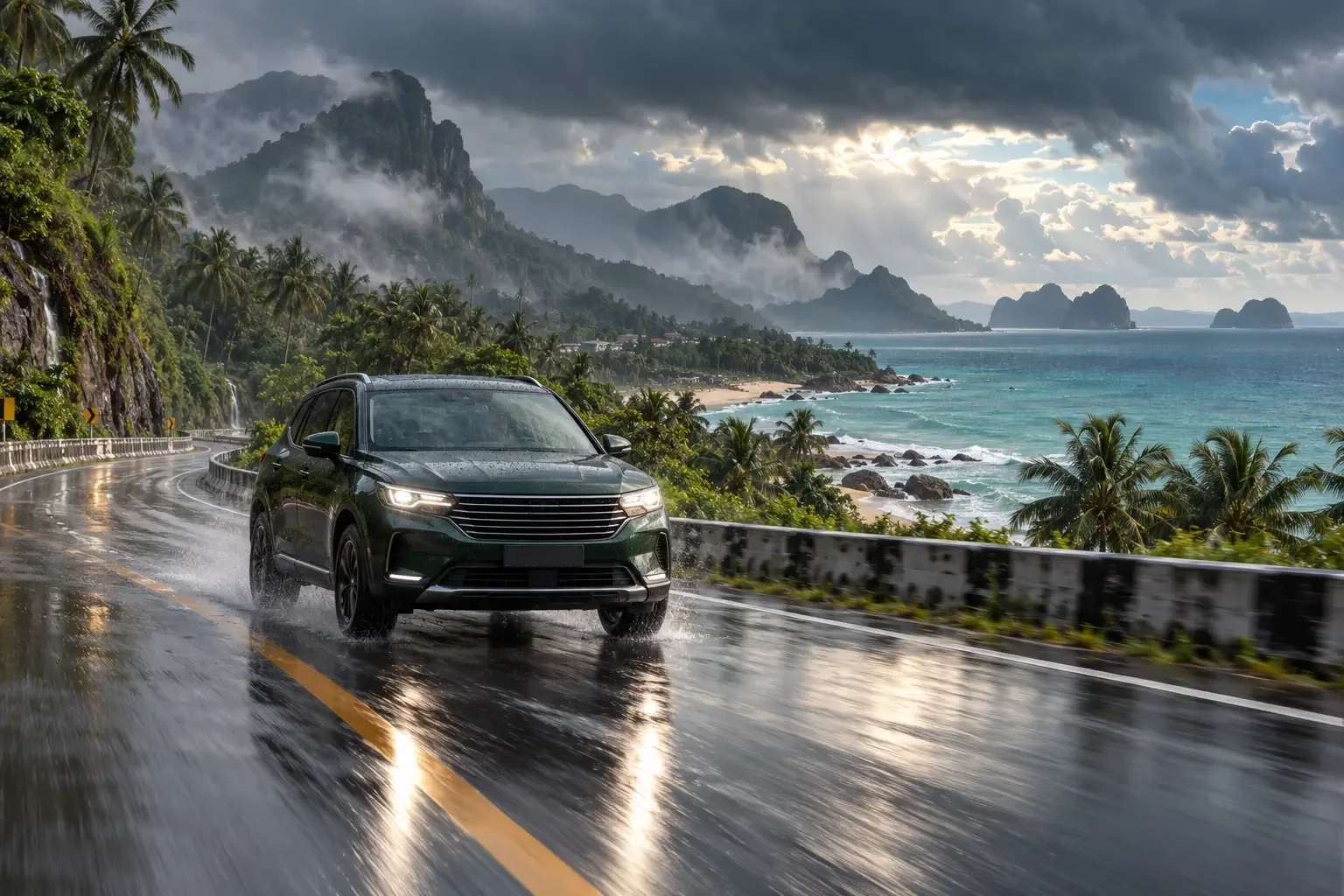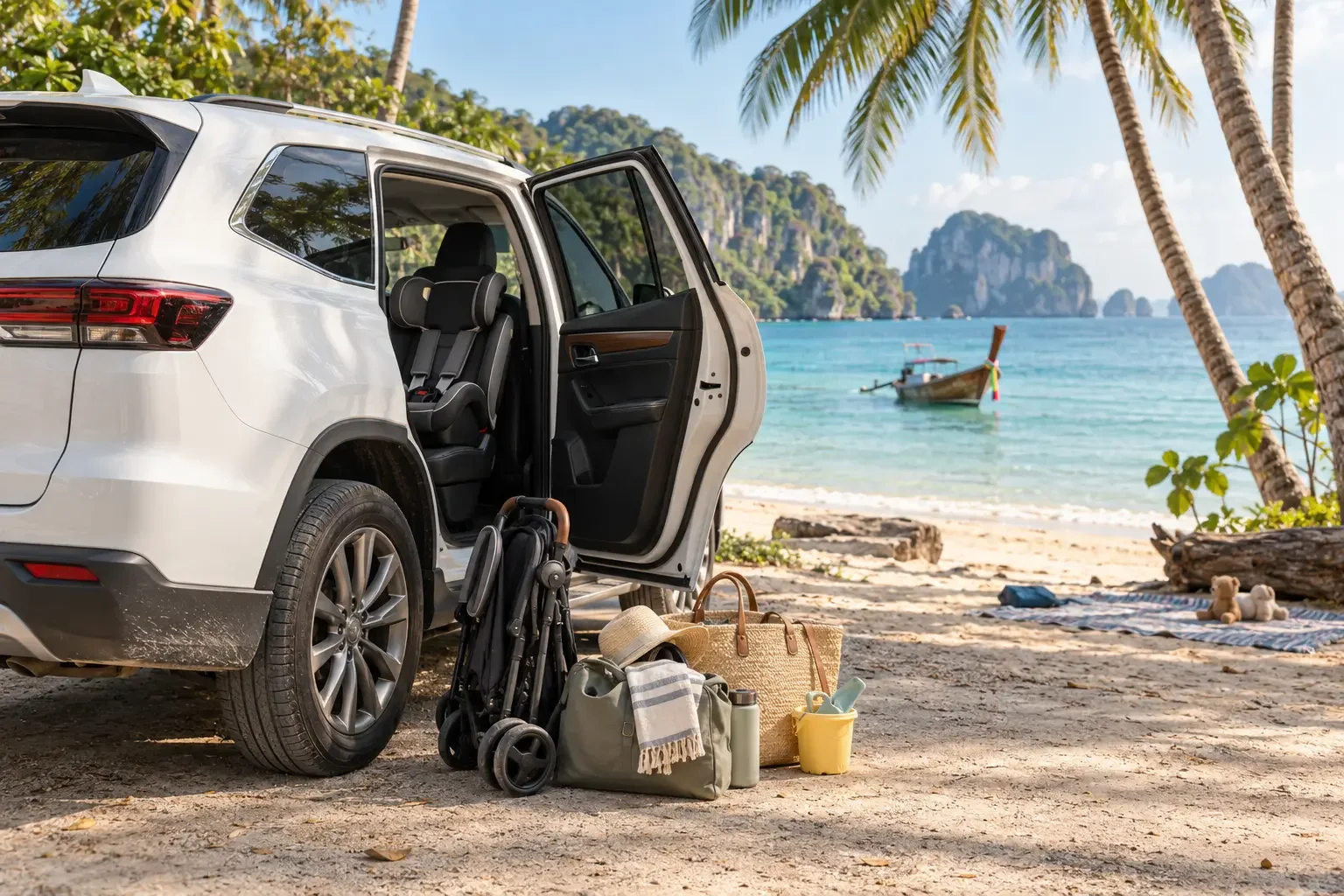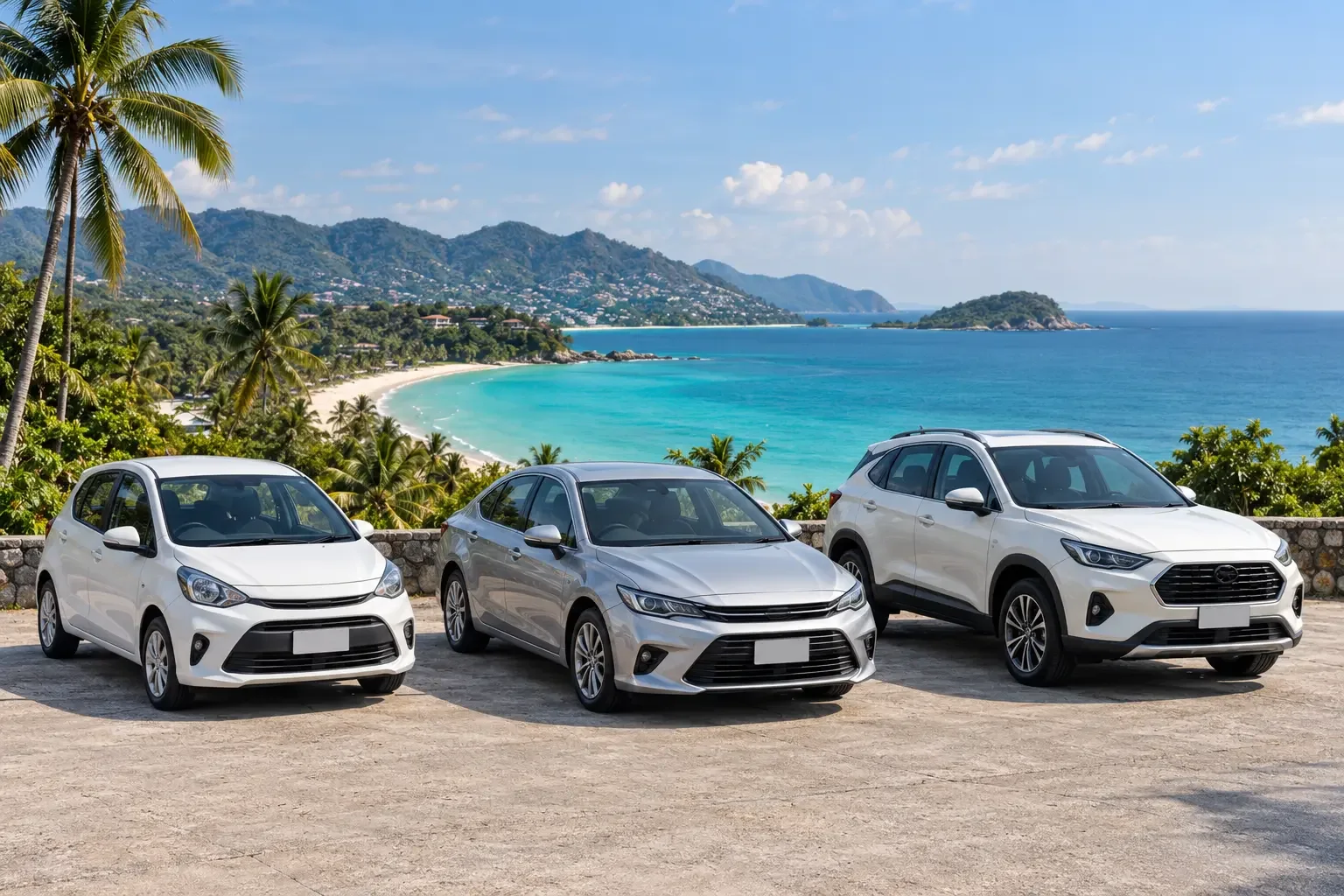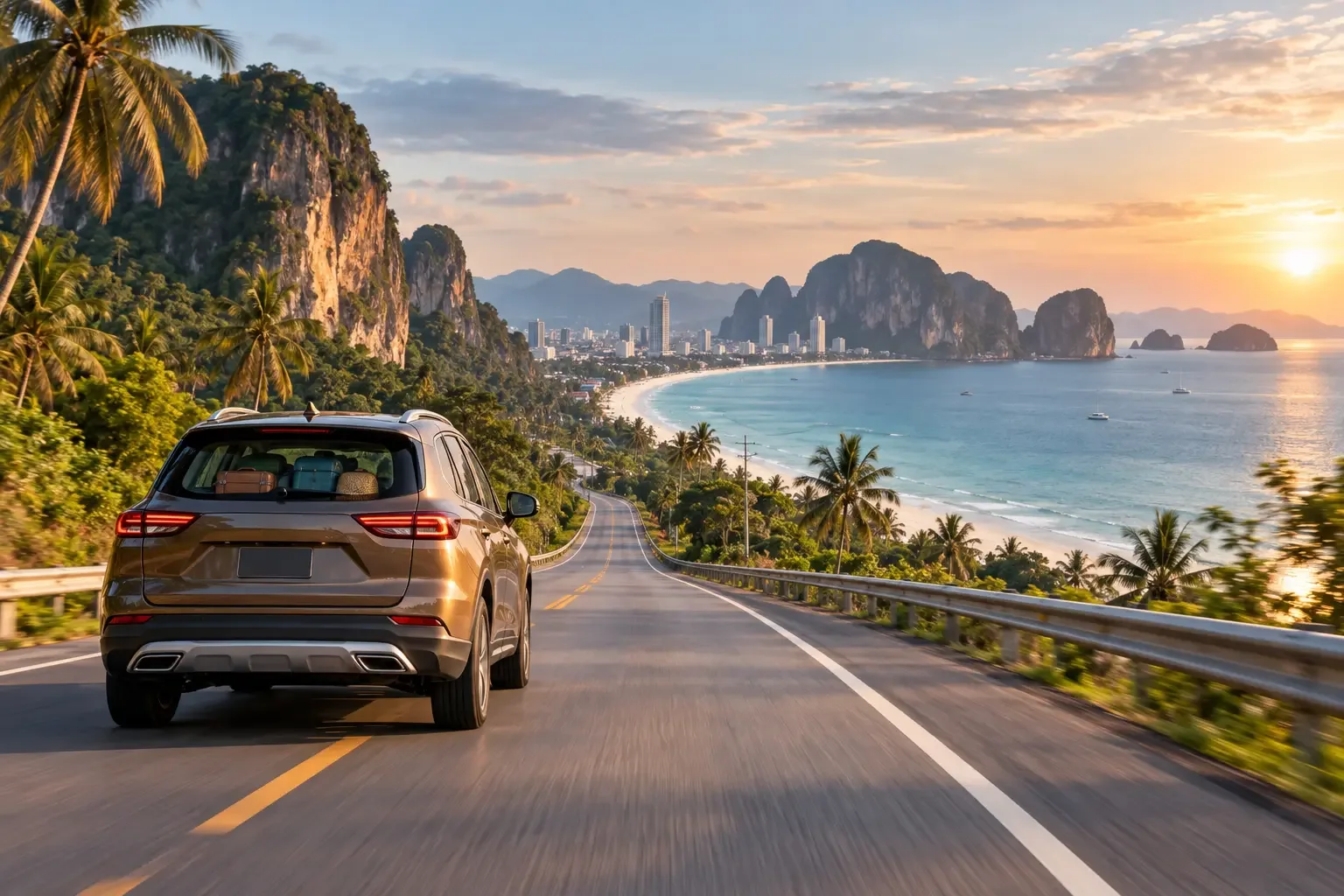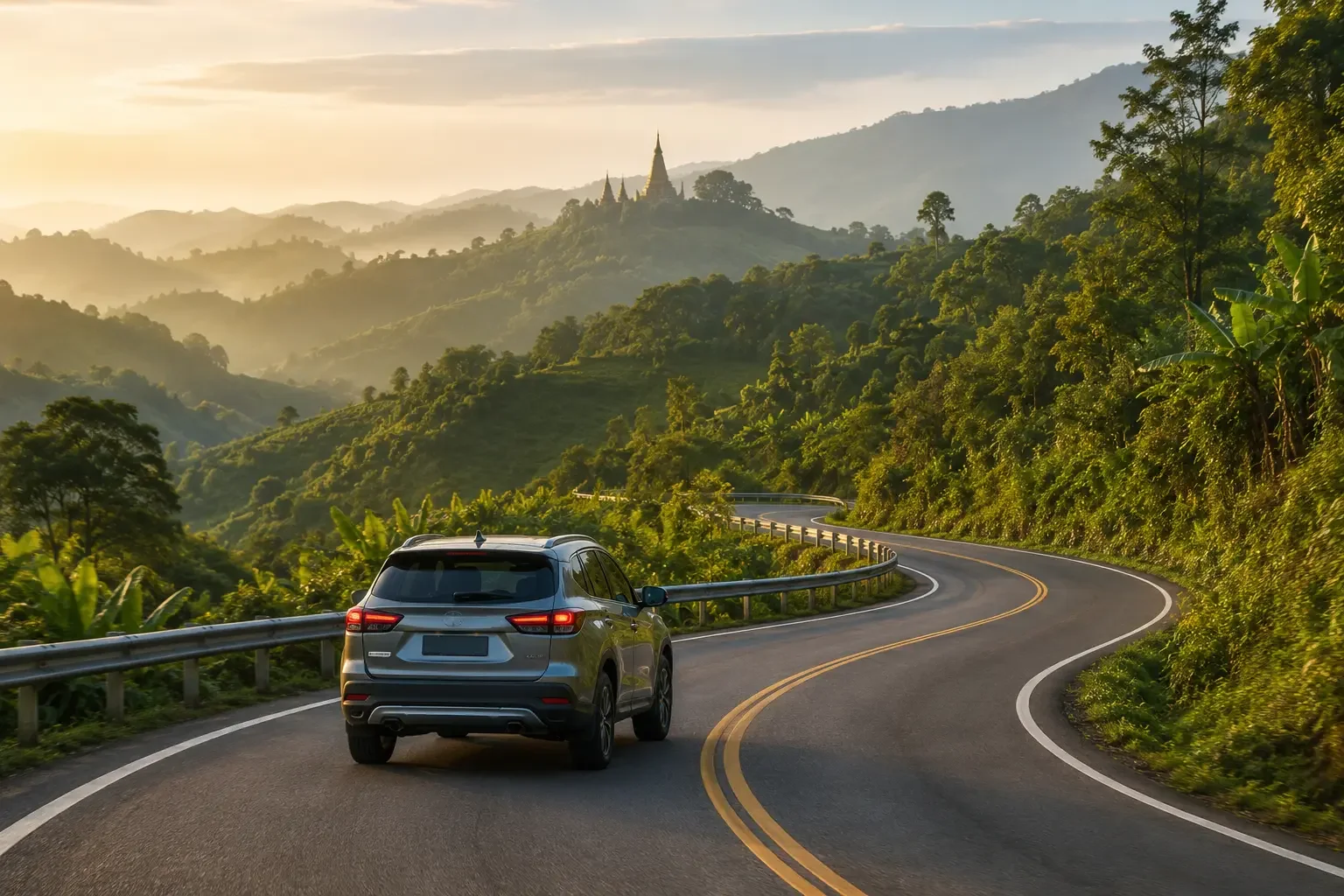
Thailand rewards travellers who leave room between the famous stops. A self-drive trip can connect old towns, national parks, mountain villages and quiet coastal roads on one flexible itinerary. The important part is choosing a route that matches your time and confidence, rather than trying to cross the whole country in a few rushed days.
This guide compares seven road trips by duration, road character and driving difficulty. Distances are approximate planning ranges and can change with detours, accommodation and road conditions. Check your navigation app, weather, park notices and official travel advice before departure.
Which Thailand road trip should you choose?
- Best easy start: Bangkok, Khao Yai and Pak Chong.
- Best route from Phuket: Phuket, Phang Nga and Khao Lak.
- Best history and rivers: Bangkok, Kanchanaburi and Sai Yok.
- Best classic mountain circuit: the Mae Hong Son Loop.
- Best short northern mountain trip: Chiang Rai, Mae Salong and Doi Tung.
- Best quieter mountain roads: Nan, Pua and Bo Kluea.
- Best southern food and wetland journey: Songkhla, Phatthalung and Trang.
1. Phuket, Phang Nga and Khao Lak
Allow: 2–3 days. Approximate distance: 300–380 km with local detours. Difficulty: easy to moderate.
This is the most practical first road trip for travellers already staying in Phuket. Begin with Phuket Old Town, cross Sarasin Bridge into Phang Nga, and continue towards the limestone landscapes around Phang Nga Bay before spending a night near Khao Lak. Return to Phuket on the main highway or add short coastal stops if the weather and daylight allow.
The route mixes straightforward highway driving with busier sections around Phuket. Leave extra time near the airport and the bridge, avoid an ambitious schedule on arrival day, and do not build the plan around a late-night return after a long flight. The Andaman side is generally most predictable in the drier months, but tropical rain can occur at any time.
Good for: first-time visitors, beaches, viewpoints and a relaxed weekend without changing the rental return city.
2. Bangkok, Khao Yai and Pak Chong
Allow: 2–3 days. Approximate distance: 350–450 km. Difficulty: easy to moderate.
Khao Yai is one of the simplest nature escapes from Bangkok. The Tourism Authority of Thailand describes the region as roughly three hours from the capital and recommends it as an accessible first self-drive trip. Base yourself around Pak Chong, visit viewpoints and farms outside the park, and reserve a full day for the national-park roads rather than treating the park as a quick stop.
Wild animals can enter the road. Keep your distance, stay inside the vehicle when instructed and never stop in a way that blocks traffic. Park access, opening times and some trails can change with weather or wildlife activity, so check official notices shortly before the trip.
Good for: a first Thailand road trip, couples, families and travellers who want nature without a long mountain circuit.
3. Bangkok, Kanchanaburi and Sai Yok
Allow: 3–4 days. Approximate distance: 450–650 km, depending on waterfall and park detours. Difficulty: moderate.
Drive west from Bangkok to Kanchanaburi for riverside scenery and Second World War history, then continue towards Erawan or Sai Yok. The first section is relatively easy; the trip becomes slower as you add park roads, village traffic and viewpoint stops. Two nights outside Bangkok make the route much more comfortable than an out-and-back day trip.
Choose either Erawan or a longer Sai Yok direction as the main excursion instead of forcing every attraction into one day. Waterfall access can change after heavy rain, and some remote sections have limited services after dark. Fill up before longer detours and download an offline map.
Good for: history, river landscapes, waterfalls and travellers who want a varied route from Bangkok.
4. Chiang Mai, Pai, Mae Hong Son and Mae Sariang
Allow: 4–6 days. Approximate distance: about 600–700 km. Difficulty: challenging.
The Mae Hong Son Loop is Thailand's best-known mountain drive. TAT describes a circuit of roughly 600 km from Chiang Mai through Pai, Mae Hong Son and Mae Sariang, with more than a thousand bends. Four days is a practical minimum; five or six allows shorter driving stages and time for viewpoints, temples and village stops.
This is not the place to learn mountain driving. Expect repeated curves, steep gradients, slow vehicles and changing visibility. Use a car with enough power for passengers and luggage, descend in a lower gear instead of riding the brakes, and finish each stage before dark. Anyone prone to motion sickness should plan frequent stops.
The cool season often offers the most comfortable conditions. Smoke and haze can affect northern Thailand during the burning season, while heavy rain can make mountain roads more demanding. Check air quality and road conditions before committing.
Good for: experienced drivers, mountain scenery and travellers who value the road itself as much as the stops.
5. Chiang Rai, Mae Salong, Doi Tung and the Golden Triangle
Allow: 3–4 days. Approximate distance: 300–450 km. Difficulty: moderate to challenging.
This shorter northern circuit links Chiang Rai with tea-growing hills, mountain viewpoints and the Mekong-side Golden Triangle area. A sensible order is Chiang Rai, Doi Mae Salong, Doi Tung, Chiang Saen and back to Chiang Rai. It delivers much of the northern highland experience without the full length of the Mae Hong Son Loop.
Roads around Mae Salong and Doi Tung can be steep and narrow. Avoid creating a schedule that requires night driving, and keep fuel above half a tank before remote sections. The route stays in Thailand; do not assume that a border crossing is open or available to foreign travellers. Follow local instructions in border areas and check current advice before departure.
Good for: tea landscapes, temples, viewpoints and confident drivers with three or four days.
6. Nan, Pua and Bo Kluea
Allow: 3–4 days. Approximate distance: 250–350 km. Difficulty: challenging.
Nan offers a quieter mountain journey than the better-known loops around Chiang Mai. Start in Nan town, continue north to Pua, cross the mountains towards Bo Kluea and return by the route that best matches current road conditions. The appeal is in the pace: small towns, rice fields, forested ridges and long scenic sections with fewer major attractions competing for time.
Short distances can take much longer than expected because of bends, climbs, rain and viewpoint stops. Keep daily stages conservative, carry water, and download maps before leaving the valley. In wet weather, ask locally about closures or landslides rather than relying only on an estimated arrival time.
Good for: repeat visitors, quieter roads and experienced drivers who prefer slow travel.
7. Songkhla, Phatthalung and Trang
Allow: 3–5 days. Approximate distance: 350–500 km before the return journey. Difficulty: moderate.
TAT presents this southern route as a combination of Songkhla Old Town and coast, the wetlands around Thale Noi in Phatthalung, and Trang's food, mangroves and beaches. It is a strong choice for travellers interested in local culture rather than a checklist of famous islands. Build in time for early-morning wetland scenery and for weather changes.
Current safety note, checked 3 September 2026: the UK FCDO advises against all but essential travel to Pattani, Yala and Narathiwat, as well as Chana, Thepa, Na Thawi and Saba Yoi districts in southern Songkhla. It also advises against all but essential travel within 20 km of Thailand's land border with Cambodia. Advisories differ by country and can change. Check your own government's guidance and Thai local-authority instructions immediately before travel, and revise the route if necessary.
The Songkhla city, Phatthalung and Trang concept does not require a detour through the districts named in that warning, but the driver remains responsible for checking the exact route. Do not treat an older itinerary or a saved map as proof that current access is safe.
Good for: southern food, old-town architecture, wetlands and travellers comfortable adjusting plans around rain and official advice.
How to plan a self-drive trip in Thailand
Match the car to the route
A small automatic car is convenient for Phuket, Bangkok approaches and easier loops. Mountain routes are more comfortable with adequate engine power, good tyres and enough room for luggage. A larger vehicle does not replace mountain-driving experience, and four-wheel drive is not permission to enter a closed or unsafe road.
Confirm the return location in writing
Do not assume that a rental collected in one city can be returned in another. Different-city returns may be unavailable or may carry a relocation charge. Confirm the exact pickup point, return point, time, fee, deposit and fuel policy before paying. If the trip is a loop, return the car to the same office unless the booking explicitly says otherwise.
Check the documents and insurance
TAT's driving guidance says visitors need a valid Thai licence, an accepted International Driving Permit, or a licence from an ASEAN member country as applicable. Carry the original documents requested by the rental provider and verify what the insurance covers. Missing or unsuitable documents can affect coverage after an accident.
Plan for left-side driving
Thailand drives on the left. Wear seat belts, respect speed limits and allow extra space around motorbikes. Avoid driving immediately after a long flight, in severe rain or after drinking alcohol. In an emergency, TAT lists 1669 for medical help and 191 for police; contact the rental provider and insurer as soon as it is safe.
Use daylight as part of the itinerary
Navigation times do not include fuel stops, viewpoints, food, heavy rain or slow traffic. On mountain routes, plan to arrive well before sunset. Keep offline maps, a charged phone, water and the rental contact details in the car.
Start with the route that fits the current fleet
Thailand Rental Cars is currently active in Phuket, with more Thai cities being added. If your trip begins in Phuket, browse the current Phuket fleet and select dates to see live availability. For other starting cities, arrange a suitable local rental independently and confirm every return condition directly with that provider.
The best Thailand road trip is not necessarily the longest one. Choose a realistic daily distance, protect time for weather and unplanned stops, and make the driving part of the holiday rather than a race between attractions.