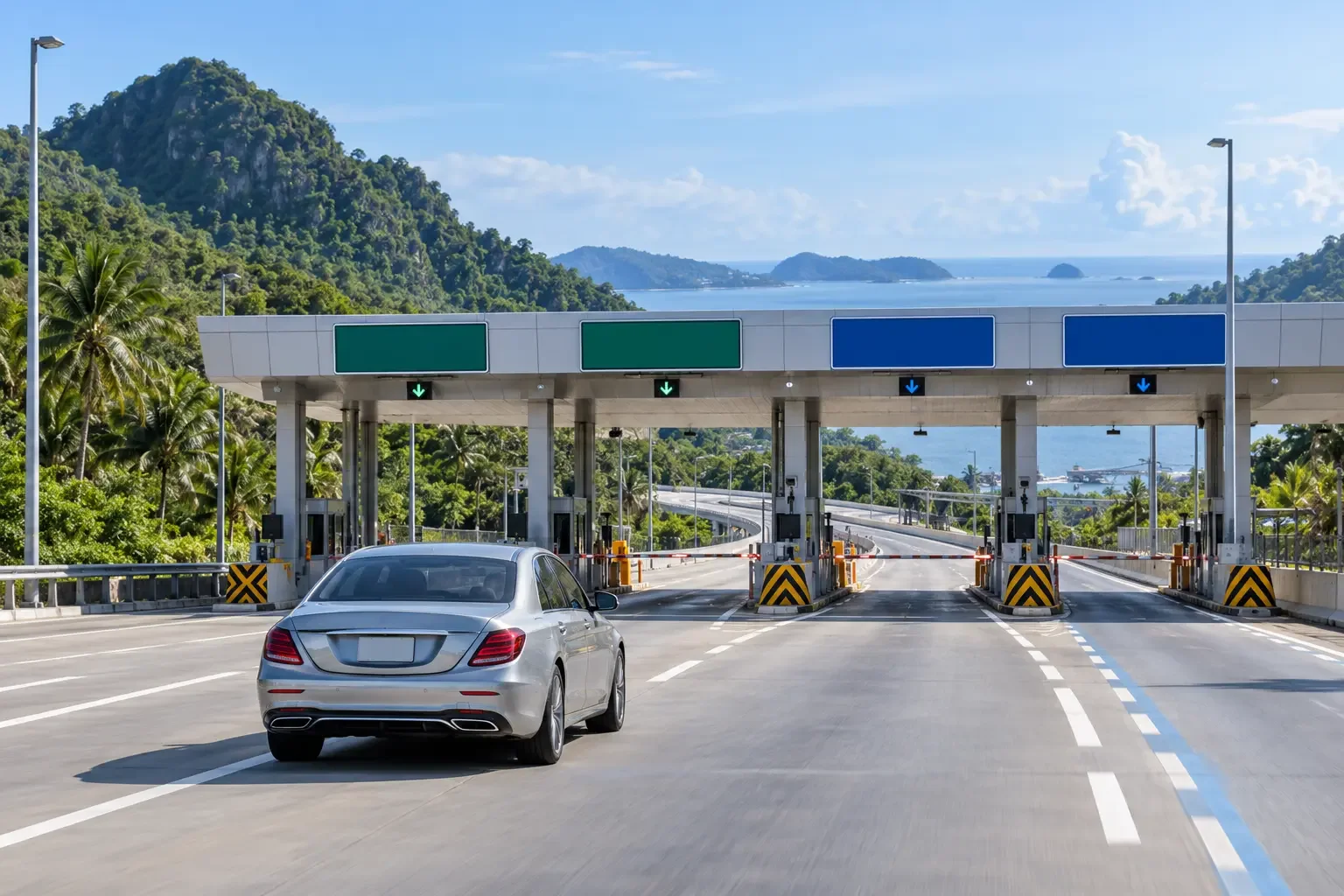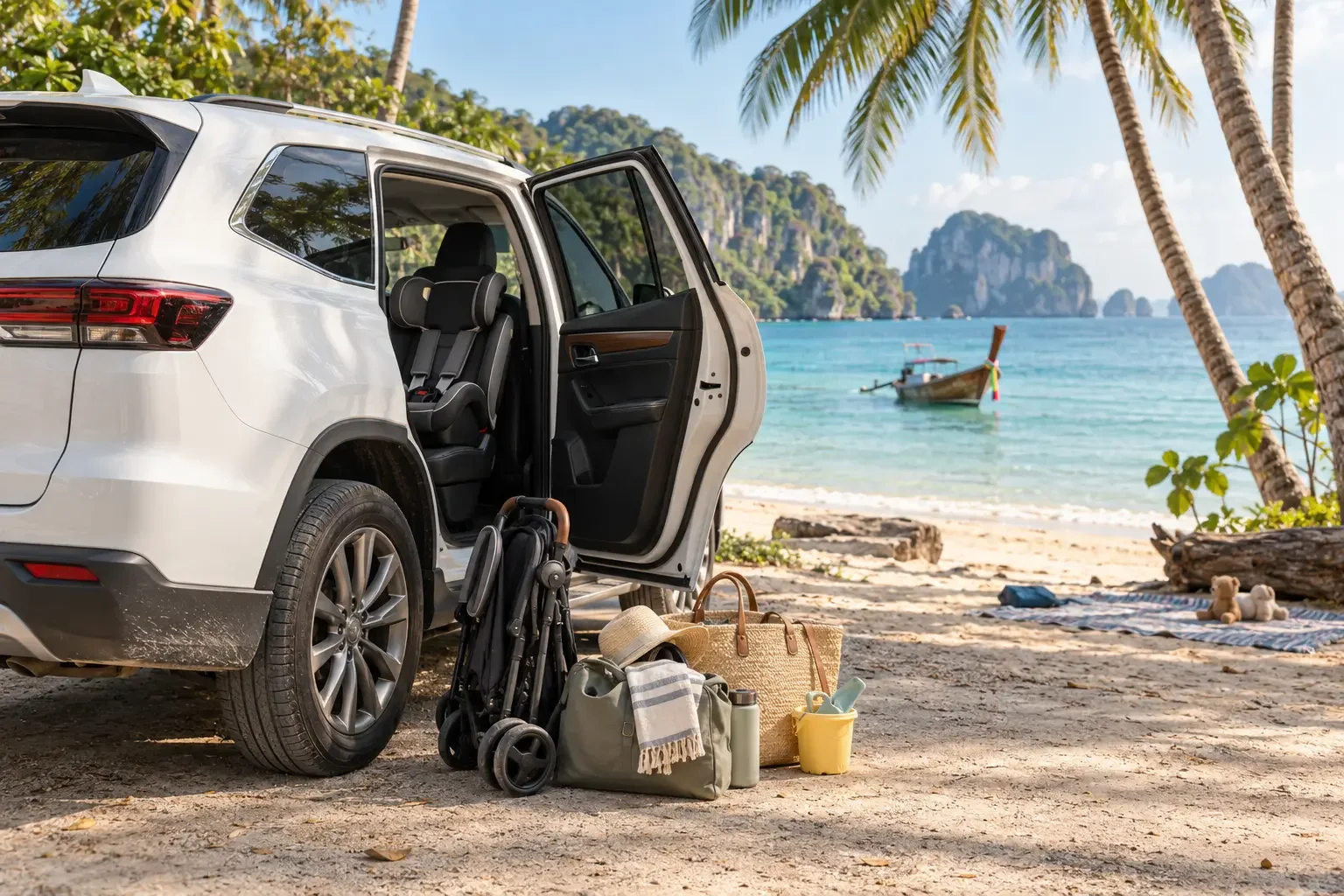
A family car trip across Thailand succeeds when adults protect the child's routine as carefully as the route. Long distances, tropical heat and frequent hotel changes magnify small problems. The solution is not more entertainment in the back seat; it is a suitable restraint, safe packing, shorter driving blocks and a plan that can stop before everyone is exhausted.
Arrange the restraint before choosing extras
Tell the rental provider each child's age and size and ask which restraint is available. Confirm how it attaches and whether a photograph can be sent. If you bring your own, check compatibility with the vehicle and practise installation before travel.
At pickup, inspect the shell, harness and buckle, then install or verify the seat without rushing. A large seat may change front-passenger legroom and the usable width of the rear bench. Two restraints can make the nominal fifth seat impractical.
Pack the cabin as a safety zone
Suitcases and heavy objects belong in the boot, low and secured. A tablet, metal bottle or camera left loose can become dangerous under hard braking. Keep only soft, essential items within reach: water, wipes, a light snack, sickness bag and one change of clothes.
Do not place objects over airbags or block the driver's rear view. Window shades must remain secure and preserve visibility.
Control heat before loading children
Open and ventilate a parked car, start the air-conditioning and touch the child-seat fabric and buckle before use. Never leave a child alone inside, even during a quick shop. Take medicine and electronics out of the heat.
On very hot days, the first drive can be a short transfer to shade rather than an immediate multi-hour journey. Offer water regularly and watch for unusual sleepiness, headache or irritability.
Turn a long route into blocks
Adults may tolerate a map estimate of four hours; a child experiences every uninterrupted minute. Break the route into manageable sections with safe, useful stops. Choose places where everyone can use a toilet, move and eat without standing beside fast traffic.
Time the longest section for a normal nap if that works for the child, but do not drive tired to preserve sleep. One rested adult driver is more important than the original arrival target.
Hotel changes need a repeatable routine
- One adult supervises children; the other handles keys and the vehicle.
- Count bags before closing the boot.
- Check that no child is inside before locking.
- Save the next destination and parking entrance offline.
- At departure, inspect the rear footwells and roof area for forgotten items.
Using the same roles at every stop reduces confusion when the family is tired.
Food in the car needs judgement
Choose snacks appropriate for the child's age and avoid foods with a high choking risk while the vehicle moves. A supervising adult should help younger children. Stop for meals rather than turning the rear seat into a dining table on a winding road.
Remove waste and damp towels daily. In heat, food spoils quickly and odours become difficult to remove from a rental interior.
Plan help along the route
Save the accommodation, rental assistance and travel-insurance contacts. Carry necessary prescriptions and know the next substantial town on a remote journey. This does not mean expecting an emergency; it means avoiding a frantic search if a fever or car problem interrupts the plan.
Let children reduce the itinerary
A single enjoyable destination is enough for many days. Add optional stops only when the family still has energy. If rain, nausea or a missed nap changes the mood, go to the hotel. A flexible route is one of the main advantages of having a car.
Compare rear-seat and boot space in the Thailand vehicle list and confirm child equipment before payment. A successful family road trip is the one where the car supports the day instead of dictating it.