Driving in Thailand is very doable once you know what to expect. Roads range from multi-lane expressways to narrow village lanes, and scooters make up a large share of the traffic almost everywhere. This guide explains common traffic patterns visitors meet across the country and how to handle them calmly and defensively.
Official Thai traffic laws always apply. The situations below are not alternative rules of the road — they are recurring traffic patterns that visitors may encounter and should be prepared to handle defensively.
Official rules and everyday road behaviour
It helps to keep three things apart: the official rules, which always apply; what you actually observe on the road, which varies by place and time; and defensive-driving habits, which are your own tools for dealing with the gap between the two.
The rest of this page is about the second and third points. Nothing here suggests that rules can be ignored, and nothing says all drivers behave the same way — traffic is made of individuals. The aim is simply to help you spot patterns early.
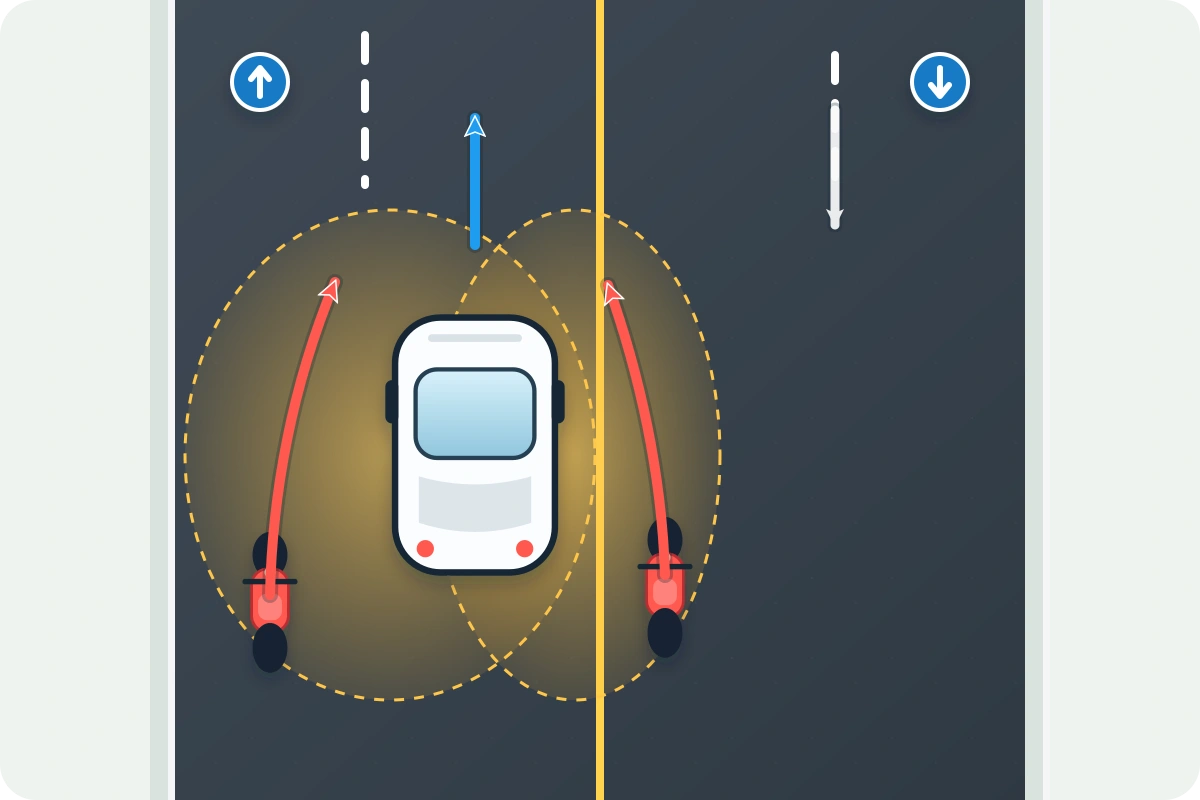
Scooters filtering between lanes
Scooters can pass on either side of a car, including where mirrors do not reach.
Scooters and motorcycles are everywhere in Thailand, and they often move through gaps between vehicles — beside a car, between lanes or along the road edge. So a scooter can appear on either side of your car, sometimes in a blind spot.
Before changing lanes, turning or opening a door, use the mirror, then look over your shoulder, with your indicator already on. Signal early and move over smoothly. The goal is to confirm the space is free rather than assume it is.
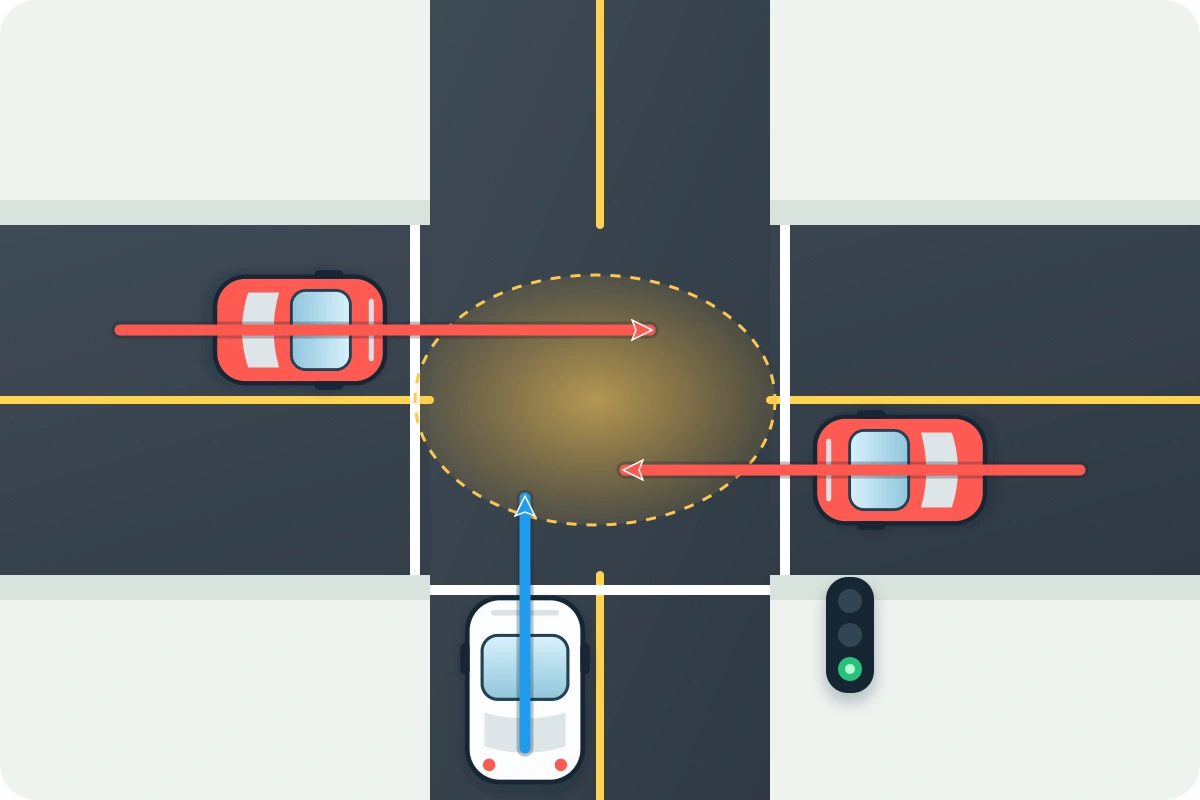
Intersections and incomplete crossing movements
Check both sides before moving off, even when your signal is green.
At busy junctions some vehicles may still be finishing their crossing when the signal changes. That is not a licence to run a red light — signals apply to everyone — but it is a reason not to accelerate the moment your light turns green.
Look both ways, let the junction clear and then move off smoothly. The same caution applies at unsignalled junctions: slow down early and make sure your view is clear before you commit.
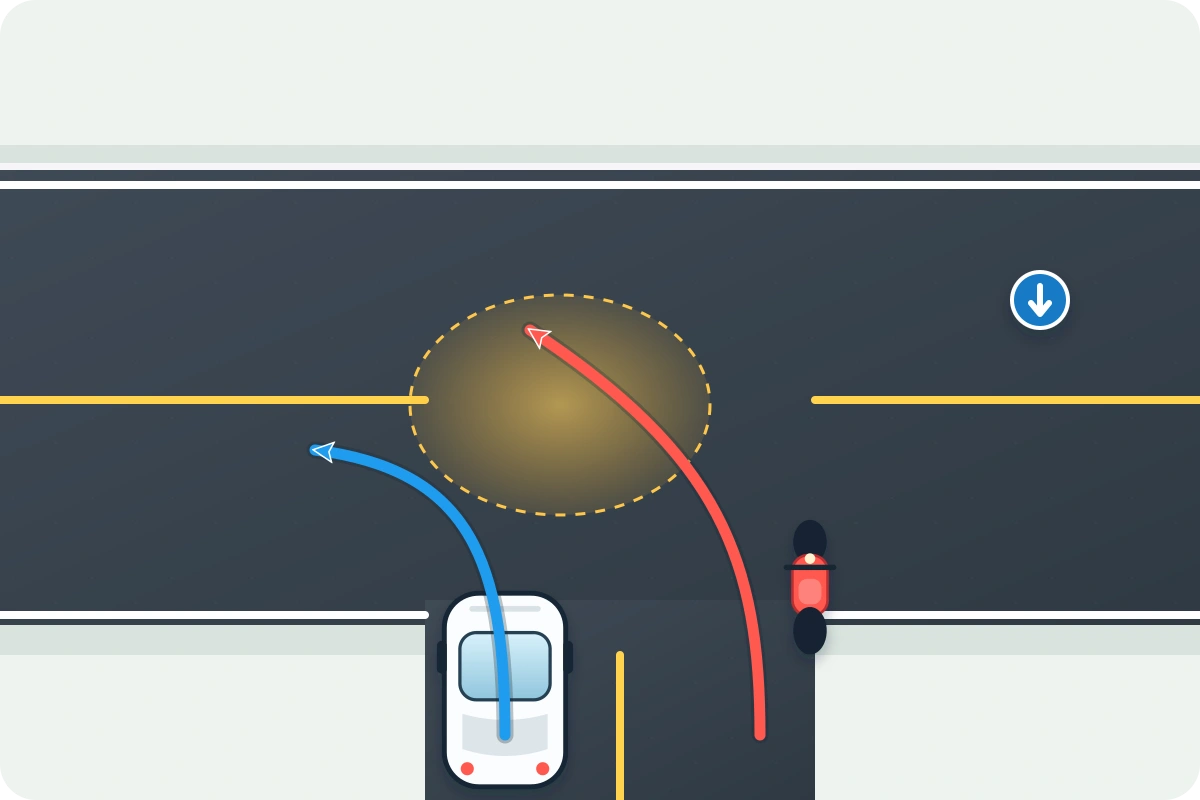
U-turn lanes and vehicles changing direction
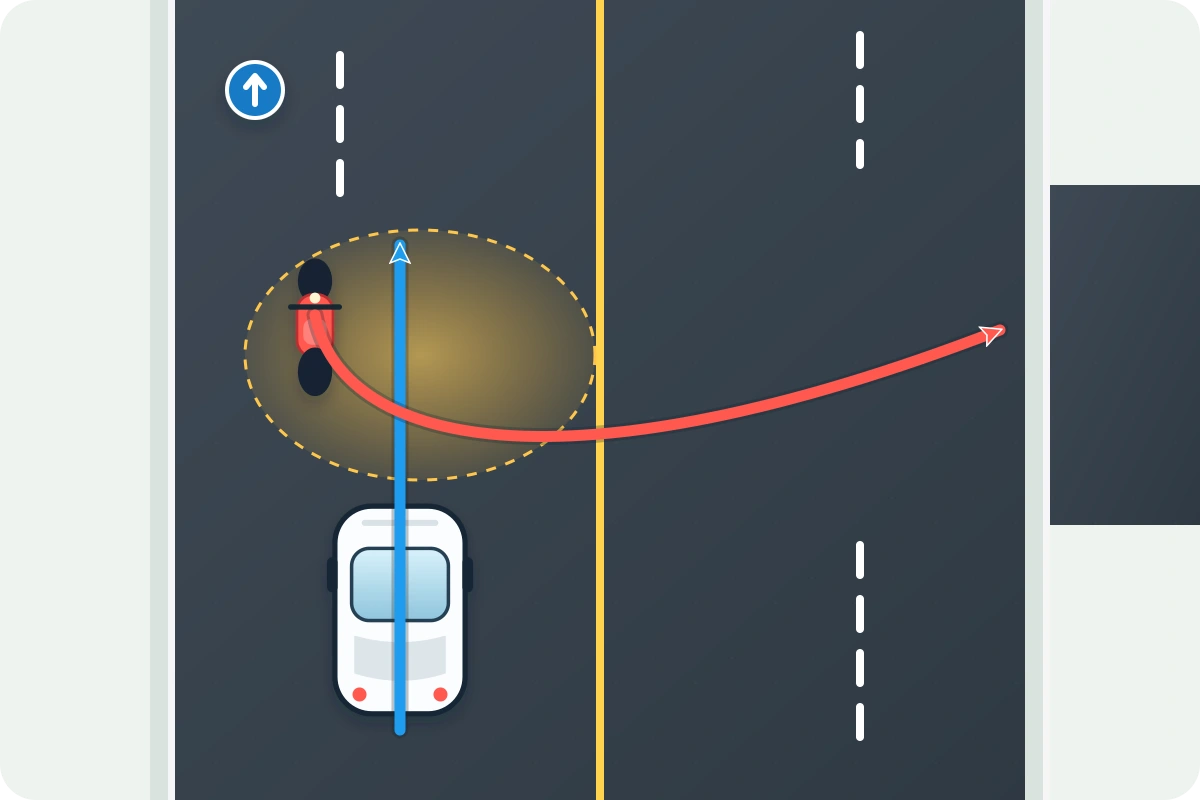
A short path through a turn can briefly bring a vehicle closer to the centre line.
Many divided roads in Thailand rely on U-turn openings in the median rather than junctions, so vehicles may slow down and move across lanes to reach them. Others come back out of a U-turn and merge from the side.
At smaller junctions, vehicles sometimes take a short path through a turn instead of following the curve, which can briefly bring them nearer the centre line. Slow down for blind corners and T-junctions, keep a little room from the centre line and watch the front wheels and body position of the vehicle ahead — they often show where it is heading.
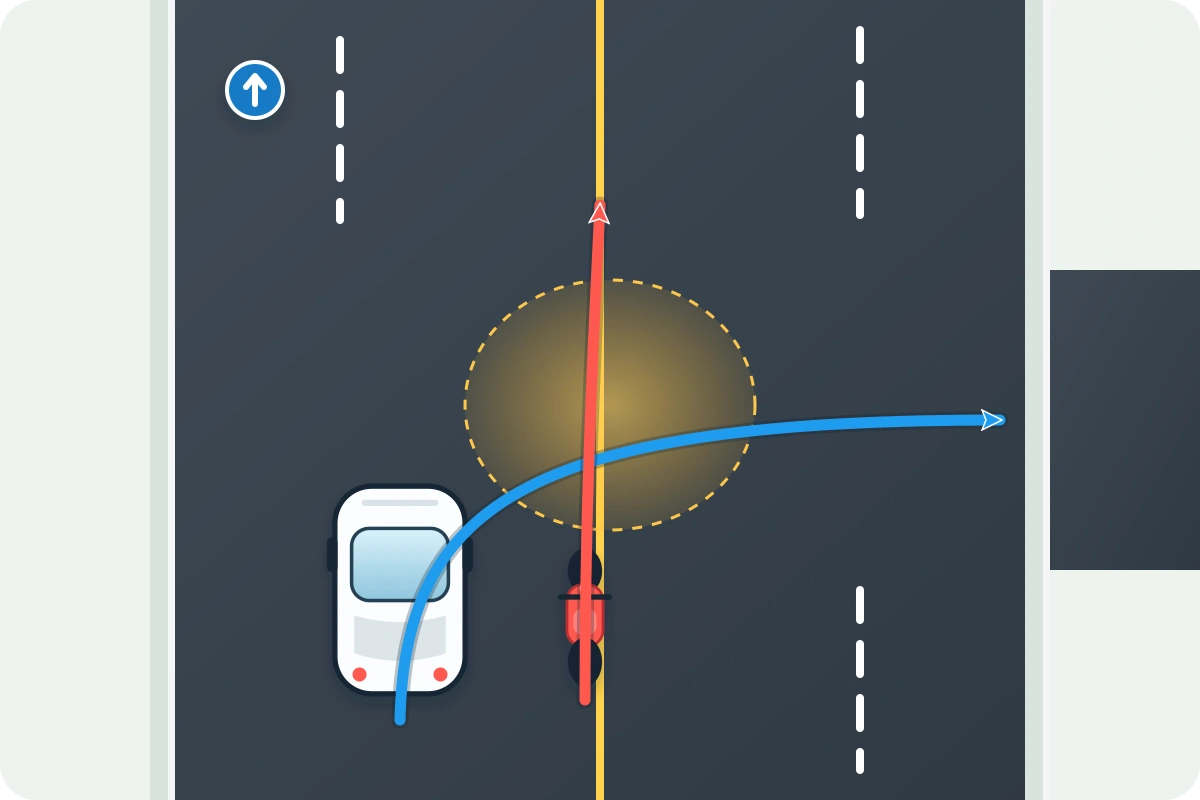
Turning traffic and overtaking from behind
Check the right-hand mirror and blind spot right before you turn across the oncoming lane.
Because traffic drives on the left, a right turn crosses the oncoming lane — and a scooter behind you may start passing on the right at the same moment.
Signal early, slow down gradually and check the right mirror and your blind spot immediately before you turn. Turn only when the way is clearly free.
A slowing vehicle may still turn
Slowing near the road edge does not always mean parking — it can come before a turn.
A vehicle that is slowing near the road edge is not always about to park. It may be preparing to cross the road or turn into a driveway, sometimes without signalling. Give it extra space and wait for the manoeuvre to become clear rather than overtaking straight away.
Horns, headlights and hazard lights
Signals are not used as uniformly in practice as they are written down, so treat them as information, not instructions.
A short horn tap often means “I am here”, for example when approaching a bend or passing close. It is usually not aggression.
Flashing headlights can mean “I am coming through”, “go ahead” or “thank you”. Do not read it as an invitation to go without checking.
Hazard lights warn of danger or an unusual stop — slow down and look for the cause.
Check every signal against what the vehicle is really doing: its speed, lane position and path.
Different environments, different driving
Thailand is not one driving environment. These are general characteristics to help you adjust your attention, not rules.
Bangkok
Multi-lane roads, expressways with complex interchanges, heavy congestion and motorcycles moving between vehicles. Plan routes and lane choices ahead and leave plenty of time.
Phuket
Resort streets, steep hills and a lot of tourist scooters mix on a small island. For a local, detailed look at Phuket traffic: Read the local Phuket road etiquette guide.
Chiang Mai
City traffic around the old town, scooters in large numbers and winding roads once you head into the surrounding hills. Adjust your speed when the road starts to climb or bend.
Islands and resort areas
Narrow roads, hills, parked vehicles, driveways onto the road and many first-time scooter riders. Slow down where your view is blocked.
Intercity highways
Higher speeds, trucks and buses, U-turn openings in the median and vehicles that may stop or slow near the roadside. Keep a generous following distance and plan your lane well ahead of an exit.
Rural roads
Slower vehicles, people and animals near the road, and limited lighting after dark. Keep your speed modest and stay alert at village entrances.
Driving at night
Visibility falls quickly after dark, especially outside towns. Some vehicles, cyclists and pedestrians may be hard to see, and roadside stalls or parked vehicles can appear suddenly in your headlights.
Reduce your speed, increase your following distance, use your lights properly and avoid long unfamiliar drives when you are tired. If you can, plan to arrive before dark.
Rain and reduced visibility
Tropical downpours can cut visibility within minutes and leave water on the road. Slow down, switch on your lights and wipers, leave a larger gap and avoid sudden braking or steering.
If rain becomes too heavy to drive comfortably, pull over somewhere safe and wait until visibility improves. Take particular care on unfamiliar hill roads in the wet.
What to do when another driver’s intention is unclear
You will rarely regret waiting. If you cannot tell what another vehicle is going to do, slow down, create space and let it move first.
Do not rely on hand gestures or a single signal. Watch speed, position and direction instead, and avoid confrontation — if someone is driving aggressively, let them pass and carry on at your own pace.
A defensive-driving checklist
No guide can make driving risk-free, but these habits help in almost every situation above.
Drive on the left and stay aware of the lane you need next.
Leave more following distance than feels necessary.
Check mirrors and blind spots before every lane change and turn.
Signal early and move smoothly.
Slow down before unclear junctions, bends and driveways.
Do not accelerate the instant a light changes — check both sides first.
Expect scooters beside, behind and in front of the car.
Take extra care at night and in heavy rain.
Never drive after alcohol or other impairing substances.
After an accident, stay safe and contact your rental provider.